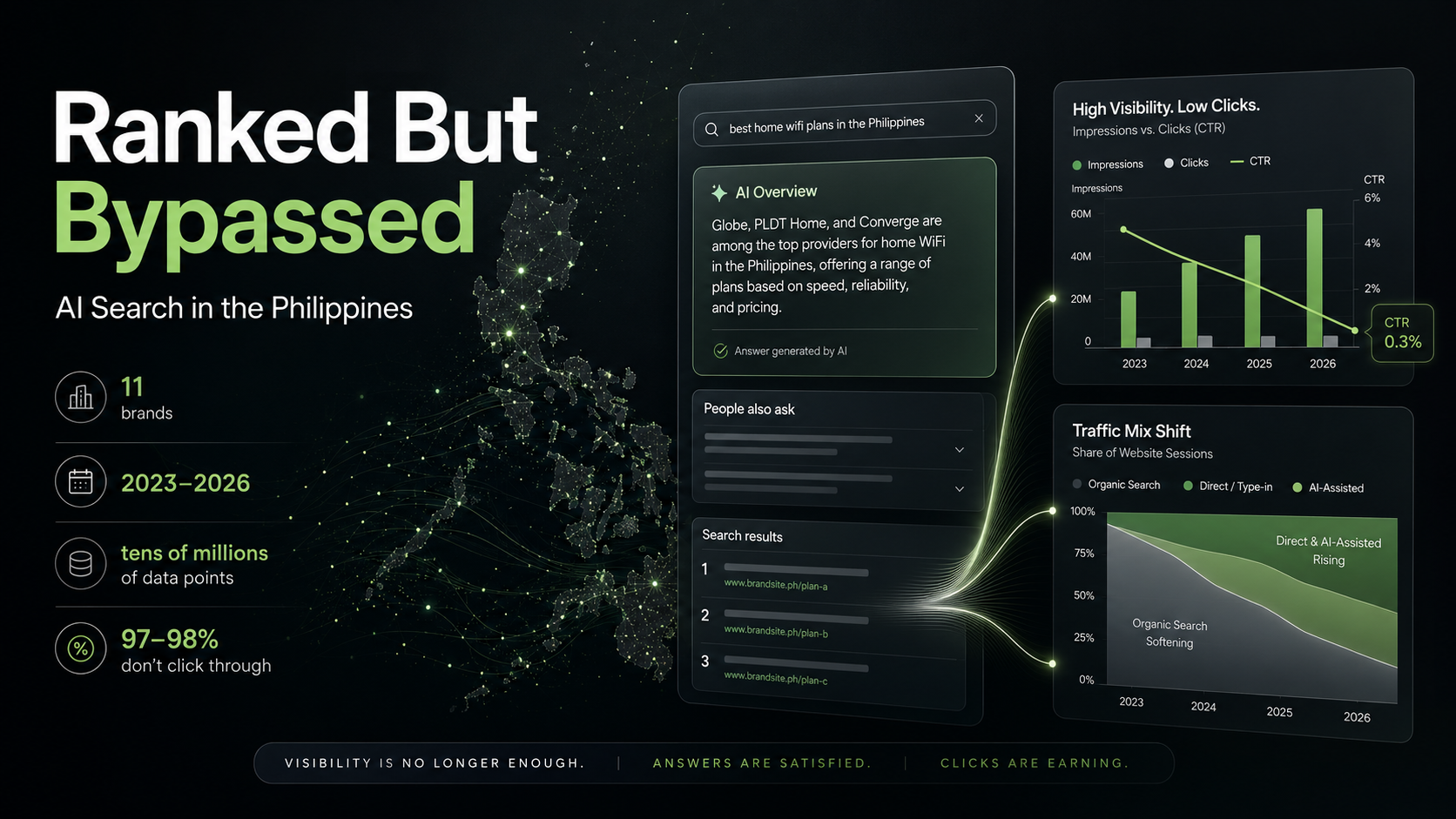
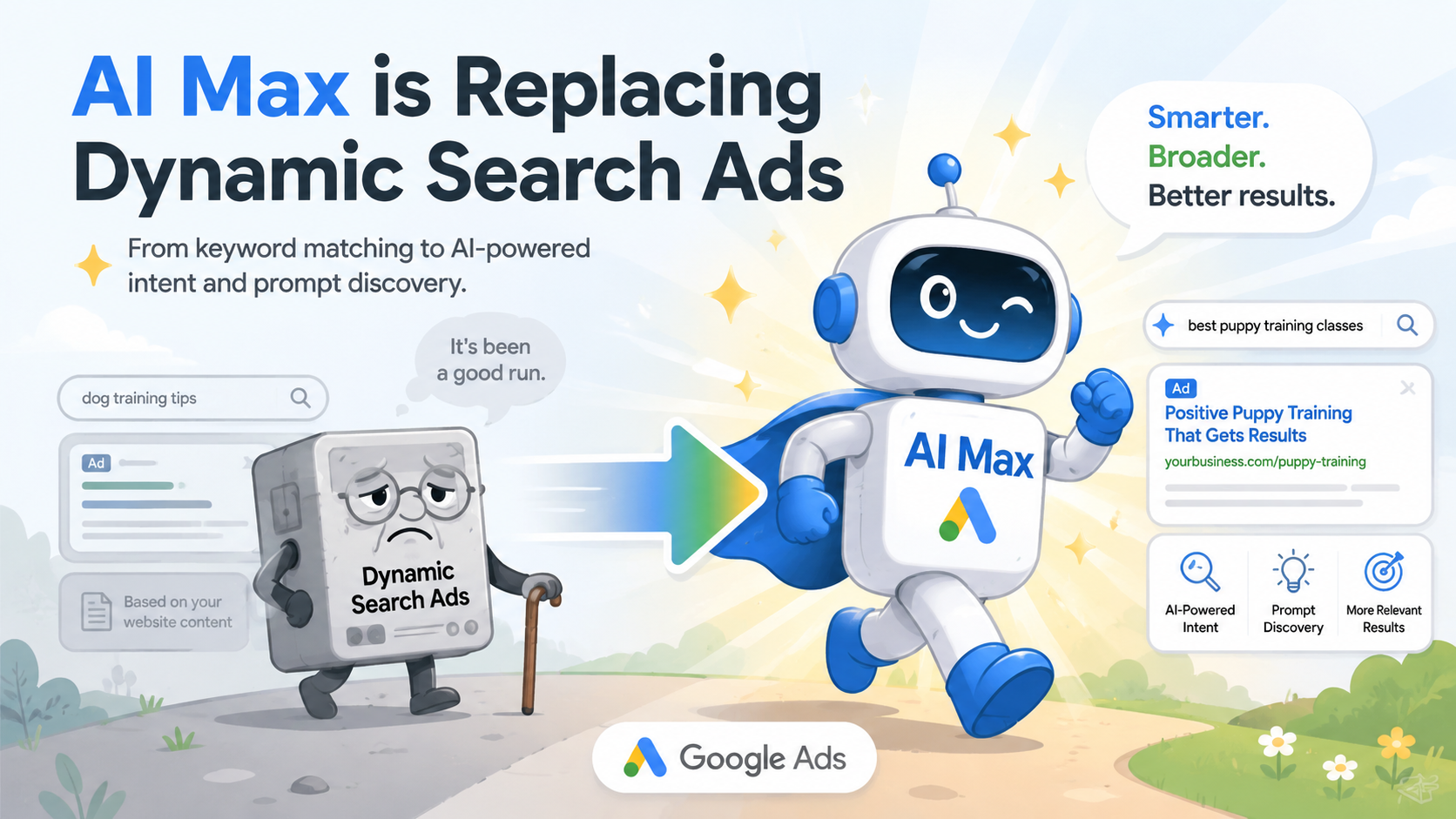
A few weeks ago I watched a query I’d normally pay good money to win get answered before my ad ever had a chance to compete. A health-conscious buyer typed a long, specific question into Google. No ten blue links. No tidy row of shopping ads up top. A paragraph. Two products named. A recommendation, formed and half-decided, before a single click left the page. That moment is the whole story of Google Ads in 2026. For fifteen years, optimization meant tuning the knobs on a machine you could see: bids, match types, ad copy, landing pages. You worked the auction and the auction worked back. That game still exists. But it’s no longer where the leverage is. Here’s the thesis I’d stake the year on: tuning your bids and keywords is no longer how you win Google Ads — it’s just the price of competing. The real leverage has moved upstream: to the data you feed Google’s AI so it doesn’t waste your money, and to whether your brand even appears inside the AI answer, where your feed quality, your structured data, and your credibility decide whether you show up at all. That’s a different discipline — and most advertisers are still optimizing for a search results page that’s quietly disappearing. Let me show you what changed, what still matters, and what to actually do about it. The 2026 contradiction: better clicks, worse conversions Start with the numbers, because they tell a stranger story than “CPCs are rising.” WordStream’s 2026 benchmark data puts the cross-industry average Search CPC at roughly $2.96 in Q1 2026, up about 12% year over year — and other 2026 reports place the blended figure as high as $4.22 once high-cost verticals are weighted in. The spread is enormous: ecommerce sits near $1.16 a click while legal runs $6.75 to $8.58. None of that is new in shape; clicks have gotten more expensive every year since 2021. The interesting part is the contradiction underneath it. Across the industries WordStream tracks, click-through rates rose roughly 7.5% while conversion rates fell about 9% — declining in 13 of 14 verticals. Median CPA climbed around 12% to roughly $23.74. ROAS slipped about 10%. Read that chain slowly: the ads got better at earning clicks, and the pages got worse at converting them. That single pattern reframes the entire optimization conversation. When CTR is up and conversion rate is down, your problem isn’t your ad — it’s the match between what the click promised and what the page delivered. The bottleneck moved from the auction to the post-click experience. We’ll come back to that, because it’s where a lot of “expensive Google Ads” problems actually live. Why CPCs keep climbing — and why AI Overviews are part of it The auction mechanic hasn’t changed: Ad Rank is still bid × Quality Score × context. More advertisers, higher bids, simple. But there’s a newer pressure most analyses miss. AI Overviews — Google’s AI-generated answer panel — now satisfy a large share of informational and mid-funnel queries on the page itself. Independent research has been consistent and brutal here: a Pew Research Center study of tens of thousands of real queries found users clicked through only about 8% of the time when an AI Overview appeared, versus 15% without one. Seer Interactive measured organic click-through on AI-Overview queries falling from 1.76% to 0.61% between mid-2024 and late 2025. The knock-on effect for paid search is structural. When the AI answers the top-of-funnel question for free, the clicks that do survive are fewer and more decision-stage — which means more advertisers fighting over a smaller pool of high-intent traffic. CPCs go up not just from competition, but from compression. This is the same shift we documented for organic in GEO in the Philippines: why most Filipino e-commerce brands are already behind — the link economy is being replaced by an answer economy, and paid search is feeling the same gravity. So yes, optimize the auction. But understand that the auction is now playing on a smaller field. Quality Score still matters — but think of it as feeding the machine Quality Score remains the most reliable cost lever you control. Google’s own guidance and years of benchmark analysis line up: improving Quality Score from a 5 to an 8 cuts your effective CPC by roughly 30–37%. That’s not a rounding error. In a $6 legal click or a $40 supplement CPA, that’s the difference between profitable and pointless. What’s changed is the framing. Quality Score used to be a thing you gamed with tight single-keyword ad groups. That era is over. The modern structure is theme-based ad groups of 15–25 keywords, broad match paired with Smart Bidding, and ruthless negative-keyword hygiene. The old SKAG playbook now fights the algorithm instead of helping it. The three inputs haven’t moved — expected click-through rate, ad relevance, and landing page experience — but the way you earn them has. You earn expected CTR with responsive search ads that give Google real creative range. You earn ad relevance by grouping keywords by genuine intent, not by cramming unrelated services into one group. And you earn landing page experience with pages that mirror the ad’s promise and load fast, because Core Web Vitals still feed the quality signal. Think less “optimization” and more “feeding the machine the cleanest possible signal.” That mental shift is the whole game in 2026. The structural change you can’t ignore: AI Max is replacing Dynamic Search Ads If you take one operational action from this article, take this one. In April 2026, Google moved AI Max for Search out of beta — and confirmed it’s replacing Dynamic Search Ads. Starting in September 2026, campaigns still running DSA, automatically created assets, or the campaign-level broad match setting will be auto-upgraded to AI Max, and you’ll lose the ability to create new DSA campaigns across the UI, Editor, and API. This isn’t a feature you can sit out. AI Max is Google’s most