Barely a few months after its release, ChatGPT has been making waves on the internet since OpenAI launched it in November 2022. From being an unknown app, it took only one week to reach 1 million users, making it the fastest-growing web app in history.
Have you wondered how ChatGPT works? What’s in ChatGPT that has attracted millions of users, including Filipinos? Would this advanced technology improve our search, discovery, and doing things? How does this app, which an unknown startup developed, has been challenging tech giants like Google and is on course to revolutionize how Filipinos and the rest of the world live and work?
This article is LeapOut’s response to the myth and mystery surrounding ChatGPT and how we, as a digital marketing company, use this disruptive technology to simplify our tasks and boost our productivity.

Person typing a prompt on ChatGPT | Photo from Freepik
What is ChatGPT?
Let us hear the answer straight from ChatGPT’s “mouth.” Below is the screenshot of the actual response I got:
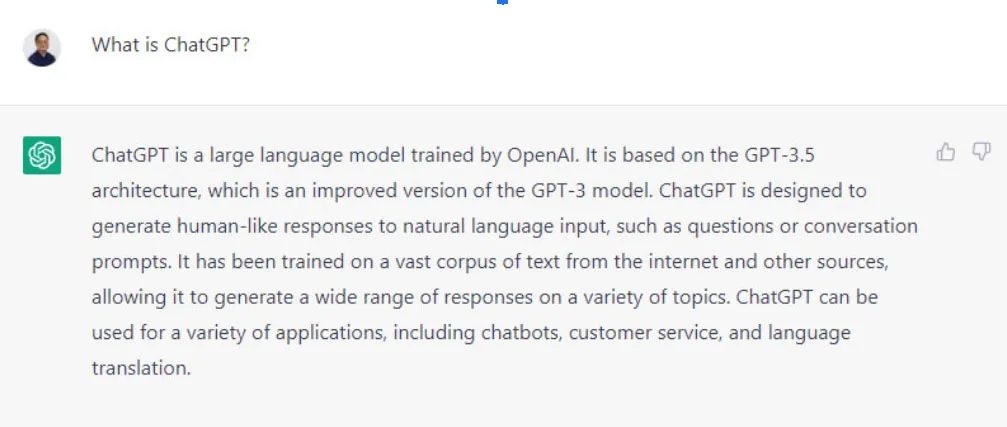
To make sense of this definition from a non-techy standpoint, let us dissect what “GPT” means from ChatGPT.
What does GPT stand for in ChatGPT?
GPT stands for Generative Pre-trained Transformer, a techy way of saying it is a chatbot that can answer any query. According to the app, GPT is “based on a transformer architecture and is pre-trained on large amounts of text data to generate human-like responses to natural language inputs.”
Suppose you’re not into machine learning or AI terminologies and want to know what GPT means in laypeople’s terms. In that case, it is a chatbot with the capacity to generate responses and content the way a human does (generative) by “learning” from a considerable amount of existing data (2021 and earlier, in the case of ChatGPT) (pre-trained) using a machine learning methodology that mimics how a human brain process language, or as OpenAI put it in its FAQs about the app, maximizes “the similarity between outputs and the dataset the models were trained on” (transformer).
Taken as a whole, ChatGPT is an AI that can understand queries or prompts language after undergoing training for several years and then generating a response in text content from the pool of data it has been trained on.
The AI chatbot’s incredible power In just a few weeks after ChatGPT’s launch, tech giant Google, its apparent closest competitor, sounded code red, perhaps the most serious in its more than 20 years of dominance in online search. In just a few weeks, Google introduced Bard, its version of a generative AI bot.
Other tech companies followed suit after witnessing the exponential rise of OpenAI’s launch of their version of artificial intelligence chatbots. From Google, other industry leaders, including social media king Meta/Facebook, Chinese e-commerce behemoth Alibaba, and Firefox creator Mozilla, joined the AI bandwagon.
What is the Use of ChatGPT?
What’s unique about ChatGPT, aside from being free of charge, is its power to generate “fresh” text content. Its primary purpose is to help users by generating responses to their queries in ordinary human language. It can also perform various natural language processing tasks, including translation, summarization, sentiment analysis, and language understanding.
Personally, as a web content specialist and a curious student of various fields, I tried using this advanced AI chatbot to do the following:
Short to long-form content
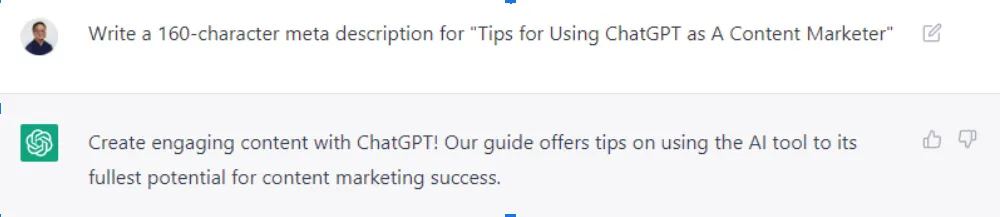
ChatGPT is a boon for people struggling to write short text such as slogans, captions for social media, and meta descriptions for blog posts.
Language translation
This powerful app can also act as a personal translator. I tried asking it to translate a simple sentence, “I think it will rain this afternoon.” into Chinese. Here is the result:
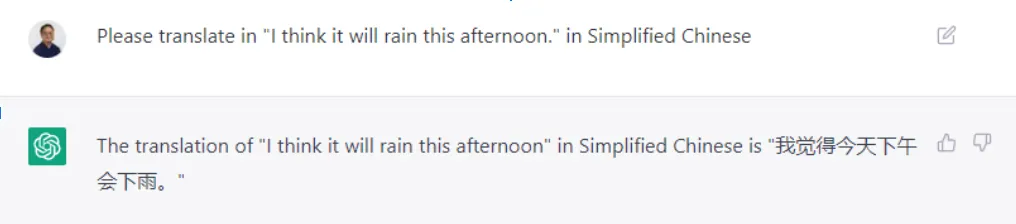
As a person who knows elementary to intermediate Chinese, its translation is accurate considering the nuances in the language.
Creative writing
It can also compose more creative text like marketing copies and taglines besides writing articles, blog posts, and other types of text content. It can also come up with lyrics and poems.
Curious, I asked or prompted ChatGPT to write a sonnet about a beloved dog. The AI chatbot came up with this impressive result:
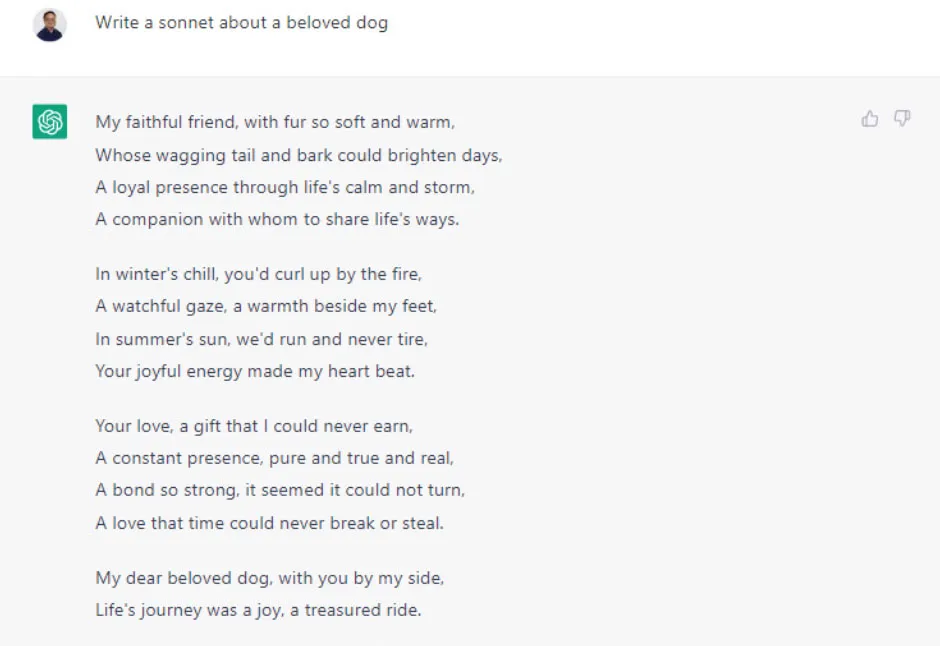
Even though the composition is far from Shakespeare’s or Milton’s masterpiece, the AI wrote a decent poem that even an average person has difficulty writing.
Coding
With the correct prompts, programmers can use the app to help them with coding tasks in most programming languages. It has been trained to generate web pages and apps. Data professionals can also use this to crunch numbers and easily create visualizations.
How LeapOut uses ChatGPT?
In line with the company’s value of utilizing tech to provide the best service to clients, LeapOut has been using the latest online tools, including AI applications. Even before ChatGPT, the company’s content team has been using another AI app to facilitate our writing and content creation tasks.
The team has used it alongside other online tools just days after OpenAI announced its public release of ChatGPT. Aside from research, we also use it for creating outlines for articles and blog posts. The app is also helpful in generating ideas for our Social Media team’s copy ideation. Its responses still need improvement, so we must conduct additional research to ensure accuracy and avoid plagiarism.
Our SEO team also takes advantage of the AI chatbot’s capability as a companion to Semrush and other tools. It helps choose the best keywords to target in our campaigns and content requirements.
When was ChatGPT released?
OpenAI, a San Francisco-based artificial intelligence research company, officially launched ChatGPT on November 30, 2022.
When prompted about its history, the AI chatbot came out with this output:
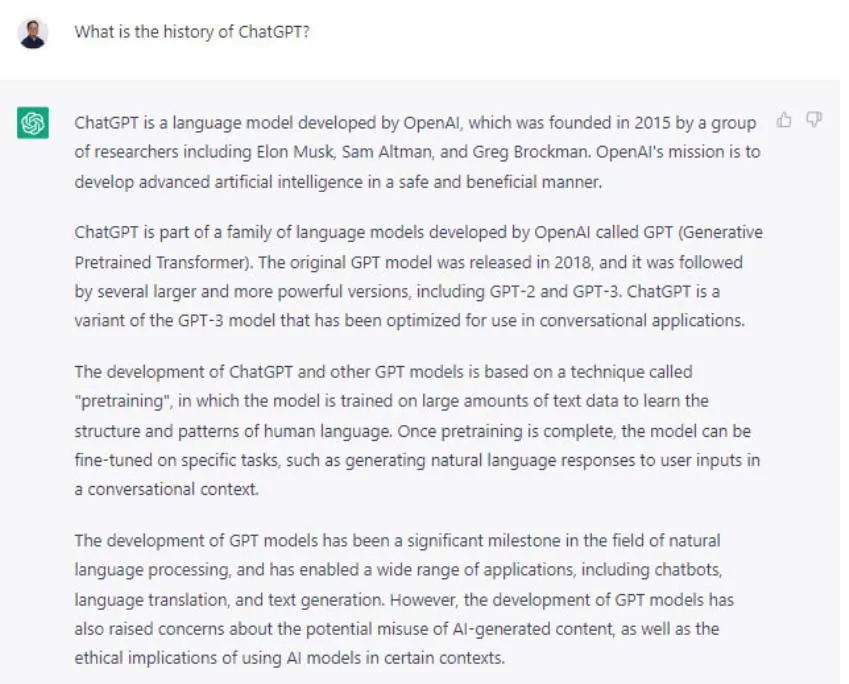
Technology leaders, including CEO Sam Altman, Elon MZusk, Greg Brockman, Ilya Sutskever, John Schulman, and Wojciech Zaremba, joined hands in developing advanced artificial intelligence they claimed to benefit humanity.
Its development was led by a team of AI researchers and engineers who used state-of-the-art deep learning techniques to train me on massive data. The training data consisted of various texts, including books, articles, websites, and conversational data. The goal was to teach the program to understand human language and generate human-like responses to questions and prompts.
How many users does ChatGPT have?
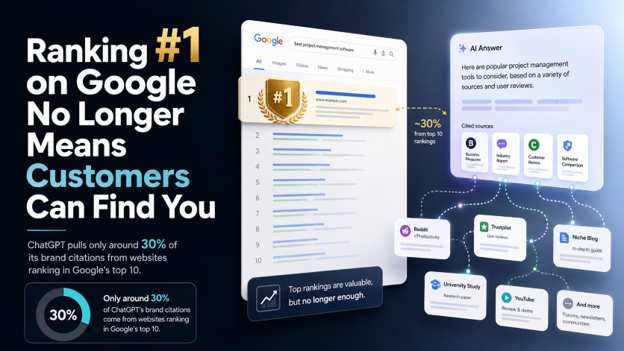
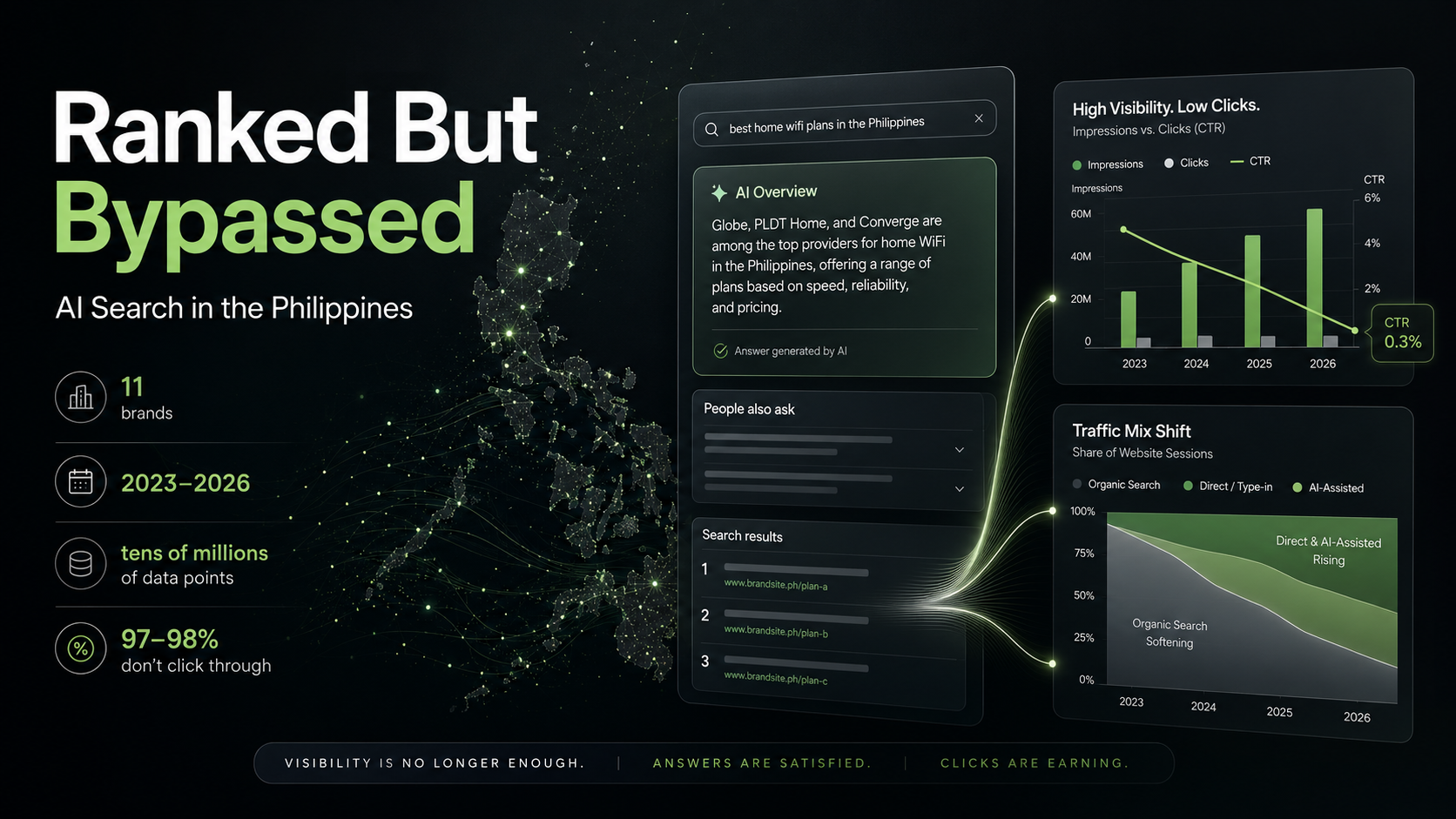
From the record 1 million users just the first week after ChatGPT’s release, as tweeted by OpenAI CEO Sam Altman, ChatGPT has continued to break records in user base growth. Similarweb reported that in only three months after its release, the app had already attracted 100 million monthly active users. In comparison, social media apps TikTok and Instagram took nine months and 2.5 years to achieve this feat.
In another Similarweb report, the AI chatbot had already attracted a billion visitors in February 2023. While this may sound massive, this still pales in comparison with the search engine leader Google, which has 4.3 billion users.
Is ChatGPT free?
Yes. You can use ChatGPT free of charge. Roughly three months after its initial release, the app’s creator offered ChatGPT Plus, the paid version, in February 2023 while retaining the free version.
As of this writing, OpenAI offers ChatGPT Plus for a $20 monthly subscription. Paid users have the privilege of faster processing time, obtaining access to the app even during peak hours, and priority access to the app’s latest features and improvements. In March, OpenAI announced that paid users could use the next generation of ChatGPT.
OpenAI has announced GPT-4, the next generation of ChatGPT. Even though it is still in the research stage, paid users can try this ChatGPT on steroids. According to its creator, the latest version of the AI chatbot has made an enormous leap in terms of performance. As of this posting, this technology is only available for ChatGPT Plus subscribers.
Does ChatGPT save data?
Yes. This application stores data and uses it for future use. Even though it cannot save data independently, it uses the data you type for “research purposes.”
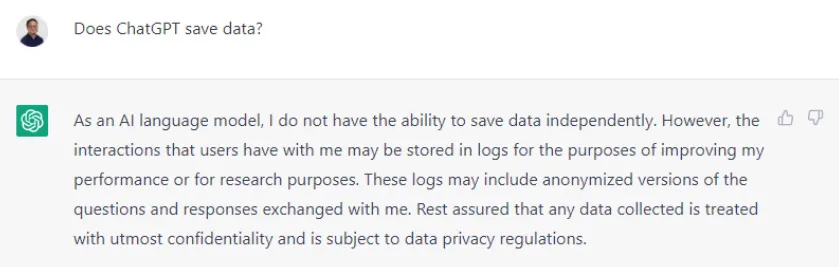
We suggest avoiding using personal and confidential data in your queries and prompts. OpenAI’s Privacy Policy admits that the company can use personal information “to provide, administer, maintain, improve and analyze the services, to conduct research, and develop new programs and services.”
Even though you can permanently delete your data, you never know when OpenAI will use your information to train the future generation GPT. Leaving your data in the app gives ChatGPT’s trainers a “license” to collect your personal information.
How to save ChatGPT conversation?
ChatGPT automatically saves queries, prompts, and conversations it has replied to. To access the history of your past prompts, log in to your account and locate the question you want to revisit on the left-hand bar.
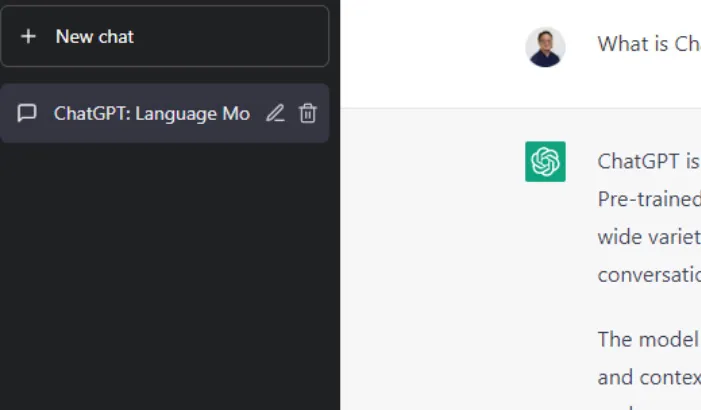
You can also click the pen icon on the right side to rename the conversation for better recording and tracking.
Can ChatGPT be detected by Reddit?
Yes, Reddit and other online platforms can detect ChatGPT. Some moderators or users may see a message or post generated by an AI language model like ChatGPT, especially if the responses are consistently well-written and contextually appropriate.
However, it’s worth noting that ChatGPT and other language models are designed to generate text that is indistinguishable from a human-generated text in many cases. This means that it is only sometimes possible to detect when a message or post has been generated by ChatGPT, mainly if the responses are designed to mimic the writing style of a particular user or group of users.
Using language models like ChatGPT in online communities raises questions about authenticity and transparency. Users may only sometimes be aware that they are interacting with an AI-generated response.
How many questions can you ask ChatGPT in an hour?
OpenAI says the ChatGPT free version has a limit of 14,400 questions in an hour or roughly four questions per second. In reality, the number of questions that the app can answer every hour varies depending on the following:
- How long and complex are the questions are
- How fast or stable an internet connection is
- How many users are currently accessing ChatGPT
How to prompt ChatGPT to write a code?
Coders can take advantage of ChatGPT’s power to write code. All you need to do is to provide it with specific instructions and prompts.
Here’s an example of how you can ask ChatGPT to generate code:
Prompt: “Write a Javascript function that calculates the factorial of a given number.”
Code generated by ChatGPT:
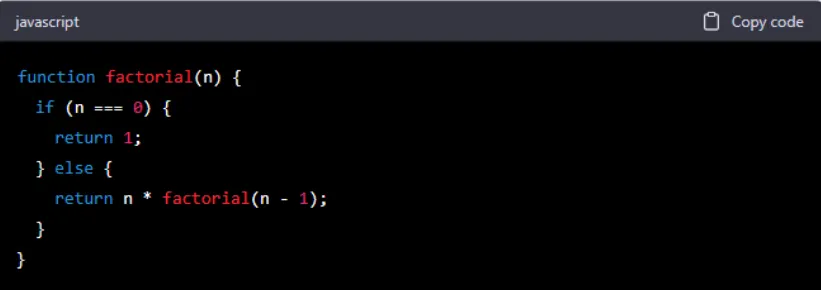
For more elaborated and clear codes, you can provide more detailed instructions. Start by specifying the programming language. You can also ask for specific coding concepts or algorithms. Here are some tips for a better coding result from ChatGPT:
Be specific
Point out what you want the code to do and provide specific requirements or constraints you face.
Specify language and framework
Mention the programming language you want the code in, including the specific libraries or frameworks you want to use.
Give examples
If you have specific examples or patterns you want the code to follow, use them as examples or explain them in your prompt.
Clarify ambiguities
If you encounter any ambiguities or unclear parts in your prompt, specify them and ask for clarification to ensure the generated code meets your needs.
Is ChatGPT available in the Philippines?
Yes, you can use ChatGPT in the country, both free and paid versions. You can use the app in nearly all countries, except for the countries where there is heavy censorship, including:
- Afghanistan
- Bahrain
- Belarus
- Burma (Myanmar)
- Central African Republic
- Chad
- China
- Cuba
- Eritrea
- Ethiopia
- Iran
- North Korea
- Laos
- Libya
- Macedonia (North Macedonia)
- Marshall Islands
- Mauritius
- Micronesia, federated states
- Russia
- Somalia
- South Sudan
- Sudan
- Syria
- Turkmenistan
- Ukraine (in some parts)
- Uzbekistan
- Venezuela
- Yemen
Italy has recently banned ChatGPT to block access to the app; the first European country to do so.
Will ChatGPT replace Philippine jobs?
ChatGPT is a potent tool that can automate tasks, and its potential economic will be substantial in the coming years. A PwC study said the AI industry, as a whole, will contribute a whopping $15.7 trillion to the global economy by 2030.
But despite its potential for boosting businesses worldwide, ChatGPT can negatively impact the labor market, especially the office and other white-collared workers. Because of its capacity to address mundane and repetitive tasks efficiently, it reduces the need for administrative and secretarial workers.
Other workers affected by this online AI chatbot include routine, low-skilled jobs such as data entry and basic online customer service. This revolutionary technology can impact even those in the creative field, like content writers and copywriters. Even those in the technical areas, like programmers, are potentially at risk.
On the other hand, high-skilled jobs directly contributing to AI, like AI engineers, data scientists, and machine learning specialists, will be highly in demand.
What’s next for ChatGPT?
The app’s overwhelming reception sparked other tech companies’ interest in releasing AI applications. Amid this increasingly tightening competition, OpenAI is working hard to upgrade its product.
After releasing GPT-4 in ChatGPT Plus, it is developing GPT-5. The company’s next-generation AI product, which one of its developers, Siqi Chen, claimed in a tweet to achieve artificial general intelligence (AGI) level of capability, is reported to end its training this December. AGI is a massive leap from the existing AI version, making its capabilities indistinguishable from humans.
If Chen’s bold assertion is realized as claimed, then the world will enjoy using the AGI eight years ahead of forecasters’ expected schedule of 2032.
Conclusion
ChatGPT has undeniably caused a significant disruption in the tech world. With its tremendous power to create decent text content and code from the data it has been trained on, the world’s fastest-growing application has provided significant help to many people. However, because of its incredible power, it poses a severe threat to a wide variety of professions ranging from admin to writers, content creators, coders, and other white-collared workers.
Facing fierce competition with other tech companies that want to challenge ChatGPT’s dominance, OpenAI is stepping up the development of GPT-5, the app’s succeeding version. The company asserts that GPT-5 would be trained to become the first AGI, further boosting the app’s functionality.
Since ChatGPT’s release, it has become one of our go-to tools to streamline our tasks as one of the Philippines’ leading digital marketing companies. This app helps LeapOut generate ideas, research, and automate processes to produce top-notch content for our clients.

Tony Chua has been in the content writing profession for about a decade, specializing in writing SEO articles, blog posts, and social media copies for various small and medium enterprises and e-commerce sites. Before this, he also authored and edited news, press releases, features, scripts, and editorials for newspapers, magazines, and websites.
Tony is a Web Content Specialist for LeapOut Digital, who has worked for Beko, DMCI, Manulife, and US-based Clark Pawners and Jewelers. Aside from writing, he has experience in desktop publishing, graphic arts, web development, and video editing.